Reviewed · FULL-DAY
North and West of Qatar Full Day Private Tour
Qatar’s best stories sit beyond Doha. This private full-day tour links old pearling towns, mangroves, a UNESCO archaeological site, camel country, strange limestone rocks, and a giant desert sculpture in one long loop around the north and west of the country. I like the variety, and I like having an air-conditioned vehicle and a guide for such a wide area. The main drawback is the pace: six to eight hours on the road can feel tiring, especially in bad weather or if you prefer slow museum visits.
I also like that the price covers private transport, tea, and bottled water rather than placing you in a large shared group. Guide Nazzi earned special praise for keeping the tour moving and adding useful narration when cold rain, thunder, and lightning made the day difficult. You should still check the forecast, since several stops are outdoors and there is no meal included.
In This Review
- Key points to know before you book
- A long northern loop from Doha
- Al Khor, the old pearling port
- Mangroves at Al Thakhira and Purple Island
- Al Zubarah Fort and Qatar’s archaeological past
- Al Jumail and the northern village atmosphere
- Crossing to Al Shahaniya and its camel track
- Zekreet’s rocks and desert views
- Richard Serra’s East-West/West-East sculpture
- Weather, comfort, and the real pace of the day
- Is $140 fair for a private day out?
- Who should choose this Qatar tour?
- My verdict on the North and West route
- FAQ
- How long does the North and West of Qatar tour last?
- Is hotel pickup available in Doha?
- Is this a private tour?
- What is included in the price?
- Is lunch included?
- Does the tour visit a UNESCO World Heritage Site?
- Can I see Bahrain from the tour?
- Does the camel track visit include a camel race?
- What is the cancellation policy?
Key points to know before you book
- Al Zubarah Fort is the historical centerpiece: Qatar’s first UNESCO World Heritage Site gives the northern route real depth beyond pretty coastal views.
- The tour covers a lot of ground: Al Khor, Al Thakhira, Purple Island, Al Jumail, Al Shahaniya, Zekreet, and the Brouq Nature Reserve all fit into one day.
- You get a private vehicle: Pickup is offered, and only your group participates, which makes the long route easier to manage.
- Zekreet brings the best oddball scenery: Limestone formations, the umbrella-shaped rock, and Richard Serra’s huge East-West/West-East sculpture create memorable photo stops.
- The natural stops depend on conditions: Mangroves, wildlife, and distant views toward Bahrain are most rewarding on a clear day.
- The $140 price works best for small groups: A private vehicle and full-day coverage can offer fair value, but the cost is harder to justify for one person traveling alone.
A long northern loop from Doha
The day begins with pickup in Doha, followed by roughly 45 minutes of travel before the first northern stops. The route is ambitious, so think of this as a broad introduction to Qatar rather than a series of long, detailed visits.
That distinction matters. You will see more of the country than you could manage easily on your own in one day, but most stops last about 30 minutes. Those short visits are enough for photos, a walk, and a guide’s explanation. They are not enough for slow birdwatching, extended ruins research, or a relaxed beach afternoon.
A private tour helps here. You can ask questions, stay with your own group, and avoid the fixed rhythm of a large coach. The air-conditioned vehicle is especially useful in Qatar, where the space between stops can be just as important as the stops themselves.
Tea and bottled water are included, but lunch is not. Bring food or plan around that gap, since the route is spread across remote coastal and desert areas and the published details do not promise a meal stop.
A few more Qatar trips worth weighing up
- Private Full Day Desert Safari
★ 5.0 · 392 reviews - Full Day Tour to Qatar North And West With Pickup From Doha
★ 4.9 · 371 reviews - Full Day Tour to Qatar North And West With Pickup From Doha
★ 5.0 · 288 reviews
Al Khor, the old pearling port
Al Khor, also called Al Khawr, is about 50 kilometers north of Doha. Its Arabic name refers to a place surrounded by sea on three sides, and the setting helps explain why this small city mattered long before Doha became Qatar’s main urban center.
Al Khor was once tied closely to fishing, dhow building, and the pearl trade. Cultured pearls later changed the industry, and the city lost its former importance, but its harbor still gives you a useful picture of coastal Qatar.
You can expect a picturesque harbor with traditional fishing dhows, a corniche, mangrove areas, and a museum focused on fishing, pearling, and dhow construction. The scheduled visit is about 30 minutes, so you will likely get an overview rather than a detailed museum visit.
I see Al Khor as an important scene-setter. It gives the later archaeological stops a human context. You are not simply looking at an old fort or ruined village. You are following the coast where people once worked, traded, built boats, and searched for pearls.
Mangroves at Al Thakhira and Purple Island
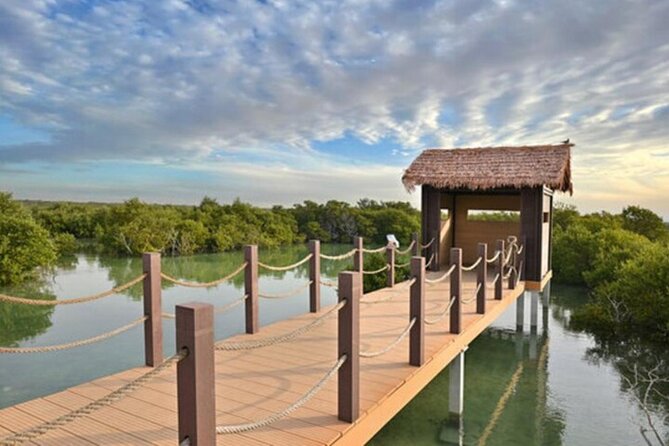
Al Thakhira Beach brings a different side of Qatar. The mangrove ecosystem provides shelter for birds, fish, and other wildlife, while also helping protect the shore from erosion.
The stop lasts about 30 minutes, which is enough to look across the area and take photographs. If you care about birds or coastal ecology, this may be one of the most meaningful sections of the day. Keep your expectations sensible, though. This is not presented as a boat trip or a long nature walk.
Purple Island, also called Al Khor Island or Bin Ghannam Island, sits near Al Khor in northeastern Qatar. Its appeal comes from its open natural setting, plant life, wildlife, and unusual name. The island is linked to Qatar’s past, but the visit is also about space, quiet, and coastal scenery.
The name Purple Island points to the area’s association with purple dye production in ancient times. The supplied tour details focus on the island’s natural qualities, so your guide’s explanation will be useful if you want more historical context.
These two stops work well together. Al Thakhira shows you a living coastal ecosystem, while Purple Island gives you a broader open-air setting. The limitation is time. Thirty minutes at each location is a quick look, not a full exploration.
Al Zubarah Fort and Qatar’s archaeological past
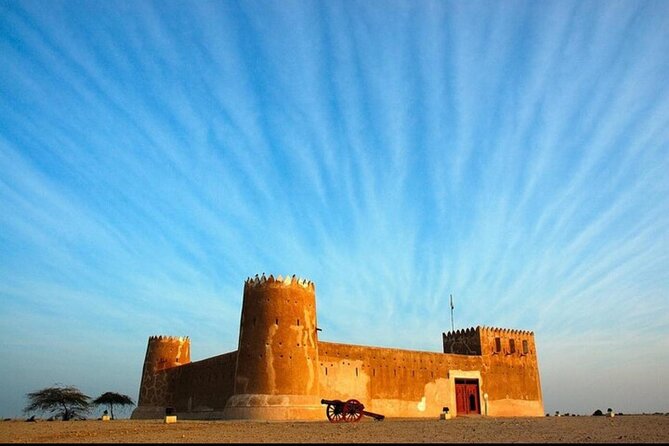
Al Zubarah Fort is the strongest reason to choose this tour. It was built beside the remains of an older stronghold and is connected to Al Zubarah, once a major port for trade, fishing, and pearling.
Today, Al Zubarah is Qatar’s first UNESCO World Heritage Site. The protected area includes an archaeological setting where international teams continue to uncover and preserve objects and structures. Artifacts found in the area are displayed in the renovated fort.
The visit lasts about one hour, giving you more time here than at most other stops. That extra time is welcome. The fort has enough historical importance to deserve a proper pause, and the surrounding ruins help you picture a settlement that was once far more active than the quiet site you see today.
I would pay close attention to the difference between the restored fort and the wider archaeological remains. The fort is the most obvious structure, but the surrounding site tells the larger story. Look beyond the walls and consider the port economy that supported fishing, pearling, and regional trade.
This is also where a good guide matters most. Nazzi was praised for offering clear narration and making the most of difficult weather. A site like Al Zubarah can feel bare if you only take photographs, but an explanation of what the ruins represent gives the visit purpose.
A completely different sort of day out from Doha:
- Doha: Safari, ATV, Camels, Sandboarding and Inland Sea Tour
★ 4.8 · 5,291 reviews - Doha: ATV, Quad/Buggy Dune Bashing, Camel Ride, Sandboarding
★ 5.0 · 3,784 reviews - Desert safari, Dune bashing, sandboarding, camel, ATV Option
★ 5.0 · 2,826 reviews - Qatar Gold Dune Safari, Dune Bashing,Camel Ride,Sand Boarding,Inland Sea Desert
★ 5.0 · 2,807 reviews
Al Jumail and the northern village atmosphere
Al Jumail adds a more intimate look at old Qatari settlement patterns. Traditional houses here were built with limestone and mud, materials suited to local conditions and available close to home.
The village stop lasts about 30 minutes. You should expect a brief walk and a look at the old structures rather than a fully restored living museum. The value is in seeing the scale and simplicity of traditional homes after visiting a formal fort and archaeological site.
The northern area also offers a sense of Qatar’s geography. On clear days, you may be able to spot Bahrain from Al Shamal. That view is not guaranteed, so treat it as a bonus rather than a central promise of the day.
Al Jumail helps prevent the tour from becoming a checklist of major attractions. It shows how ordinary homes fit into the same wider story of coastal work, trade, and settlement.
Crossing to Al Shahaniya and its camel track
After the northern section, the tour turns toward the west. The transfer to Al Shahaniya takes about 45 minutes, giving you a useful break between the coastal sites and the desert scenery.
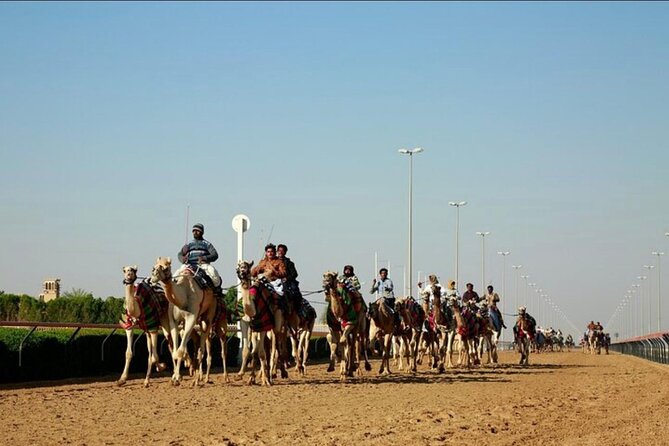
The Shahaniya Camel Race Track is a 30-minute stop where you can view camels under training. This is a glimpse into a living Qatari sporting tradition, not a full race-day program.
That distinction is important. The details promise a view of the track while camels are training, but they do not promise a race, access to the track, or a scheduled competition. If you are fascinated by camel racing, the stop may feel too short. If you simply want to see an activity tied to modern Qatari culture, it offers a welcome change from forts and ruins.
I like this part of the route because it adds variety. The tour is not only about the distant past. You also see an activity that remains part of the country’s present life.
Zekreet’s rocks and desert views
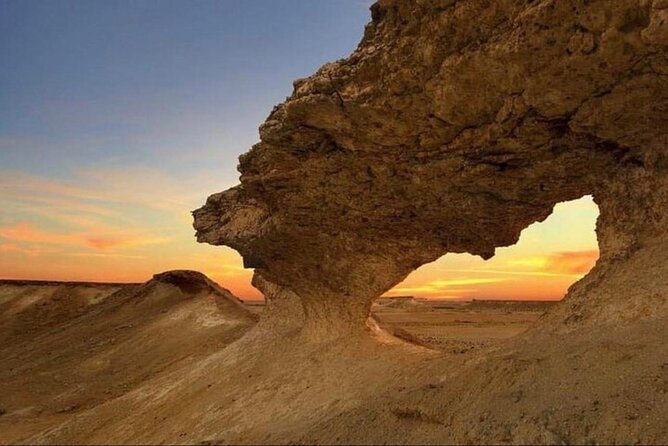
The route continues to Zekreet, with about 40 minutes of travel before the next major sights. Zekreet is known for limestone formations shaped by wind and erosion, with cliffs and unusual rock forms scattered through the desert.
The rock formation stop lasts around 30 minutes. The shapes are the main event, and the area is particularly good for photography. One famous formation is described as an umbrella-shaped rock, a natural oddity that has become a popular picture stop.
You should wear sensible shoes and be ready for uneven ground. The tour requires a moderate level of physical fitness, and that warning makes sense here. The supplied information does not give details about the walking distance or trail surface, so expect some movement over natural terrain rather than a paved attraction.
The scenery is stark, open, and very different from Doha. You may find the rocks more memorable than a polished attraction because their forms are the result of weather and time, not decoration. The tradeoff is exposure. Wind, heat, rain, and poor visibility can change the experience quickly.
Richard Serra’s East-West/West-East sculpture
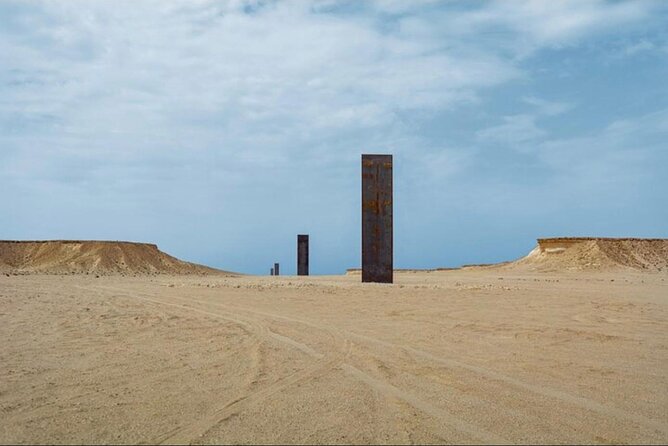
The most surprising stop is Richard Serra’s East-West/West-East installation in the Brouq Nature Reserve. Four steel plates, each more than 14 meters high, stretch for over a kilometer across the desert.
The sculpture was aligned with careful attention to the land’s shape. Its power comes from the contrast between simple industrial forms and the empty desert around them. You do not need to be an art specialist to understand the basic effect: enormous steel slabs create a measured line through a very wide, quiet setting.
The stop lasts about 30 minutes. That should be enough to see the sculpture, take photographs, and understand how the work relates to its surroundings. It is not a gallery visit, and there is no need to force an academic reading onto it.
I like that this final section changes the tone of the day. After archaeological ruins, coastal villages, and camel training, the sculpture asks you to look at Qatar as a place of scale and space. It also gives the west coast a modern cultural point, not just an old one.
Weather, comfort, and the real pace of the day
The tour operates in outdoor settings for much of the day. A past outing took place in cold rain with thunder and lightning, yet guide Nazzi worked to keep the schedule on track and provide narration. That is useful evidence of flexibility, but it is also a warning about choosing your date carefully.
Clear weather will help with the possible Bahrain view, coastal scenery, rock formations, and sculpture photographs. Bad weather can make the open stops less pleasant and may reduce visibility. Even in good conditions, you should prepare for sun, wind, and long periods in the vehicle.
The air-conditioned car is one of the tour’s practical strengths. The route covers a large part of Qatar, and private transport saves you from arranging several separate trips. Tea and bottled water are included, though you need to handle lunch yourself.
The total duration is about six to eight hours. That range likely reflects traffic, pickup location, time at each stop, and the pace of your group. You should keep the day flexible rather than planning a tight evening appointment immediately afterward.
Is $140 fair for a private day out?
At $140 per person, the value depends heavily on group size. For one person, the cost is substantial because the tour covers transport and guiding rather than a single admission-based attraction. For two or more people, the private format becomes easier to justify, especially if group discounts apply.
There are no admission fees listed for the stops, so you are paying mainly for the vehicle, driver-guide service, route planning, and convenience. That can be a fair deal if you want to see both the northern coast and the western desert without renting a car or arranging multiple transfers.
The tour is less compelling if you only want Al Zubarah Fort. In that case, a shorter outing may give you more time at the archaeological site for less money. This package makes the most sense when you value range and want to combine natural sights, historic places, local culture, and modern art.
Its private nature is also worth money for some people. You are not sharing the day with strangers, and only your group takes part. That lets you ask for clarification and keep the experience more personal, even though the route itself remains fairly fixed.
Who should choose this Qatar tour?
I would recommend it to you if you want a broad look at Qatar beyond Doha and do not want to manage a long self-drive route. It suits couples, families, and small groups who value a private car and a guide’s explanation.
It is particularly good for people with varied interests. You get coastal ecology at Al Thakhira, old port culture at Al Khor, archaeology at Al Zubarah, traditional buildings at Al Jumail, camel training at Al Shahaniya, geology at Zekreet, and contemporary art at the Serra sculpture.
You may want another option if you dislike long drives, need a slow pace, or want a serious wildlife outing. The mangroves and reserve are included as scenic and ecological stops, but the supplied details do not promise a boat ride, extended birdwatching, or close wildlife encounters.
The moderate fitness requirement also deserves attention. Most stops are short, but outdoor ground may be uneven, and weather can make walking less comfortable. Ask about the day’s conditions and wear shoes suited to natural terrain.
My verdict on the North and West route
Book this tour if you want to see how many different Qatars fit beyond Doha. The strongest combination is Al Zubarah Fort, Al Khor’s coastal heritage, Zekreet’s unusual rocks, and Richard Serra’s massive desert artwork.
I would choose a clear, comfortable-weather day and bring food, sun protection, and shoes for uneven ground. The route is busy, but the private vehicle, included drinks, and guide commentary make the long loop practical.
At 4.9 from 17 ratings, with a 100 percent recommendation figure, the experience has a strong record. More important for your decision, the praise highlights the guide’s effort and narration, including Nazzi’s response to rough weather. Just remember that this is a wide-ranging survey, not a slow, specialist tour of one site.
FAQ
How long does the North and West of Qatar tour last?
The tour lasts approximately six to eight hours, including travel between Doha and the northern and western stops.
Is hotel pickup available in Doha?
Pickup is offered, and the first stop is listed as Doha. The provided details do not specify individual hotel pickup times or locations.
Is this a private tour?
Yes. This is a private activity, and only your group participates.
What is included in the price?
Private transportation in an air-conditioned vehicle, tea, and bottled water are included.
Is lunch included?
No. Meals are not included, so you should plan for food during the day.
Does the tour visit a UNESCO World Heritage Site?
Yes. The route includes Al Zubarah Fort and the protected archaeological area of Al Zubarah, Qatar’s first UNESCO World Heritage Site.
Can I see Bahrain from the tour?
On clear days, Bahrain may be visible from the Al Shamal area. The view depends on visibility and weather.
Does the camel track visit include a camel race?
The stop allows you to view the Shahaniya Camel Race Track while camels are under training. A live race is not specified.
What is the cancellation policy?
You can cancel up to 24 hours before the experience starts for a full refund. Cancellations or changes made less than 24 hours before the start time are not accepted for a refund.
Just added around Doha
- Explore desert Qatar: Off-Road Adventures, dune bashing Tour★ 5.0 · 3 reviews
- Doha: Desert Buggy Ride, Camel Ride, Dune Bashing, Sandboard★ 5.0 · 3 reviews
- Private Wakesurfing or Wakeboarding along Doha’s skyline★ 5.0 · 3 reviews
- “Doha Desert Safari with all activities”★ 5.0 · 3 reviews
- Private Desert Safari, Sand Dunes Bashing and Inland Sea Visit★ 5.0 · 3 reviews
- Guided Doha Sightseen Tour By Certified Tour Guide (Private Tour)★ 5.0 · 3 reviews
- Grand Qatar Tour★ 5.0 · 3 reviews
- Doha: Private City tour from Cruise Port terminal★ 5.0 · 3 reviews
Full-Day, compared.

Full Day Tour to Qatar North And West With Pickup From Doha
Read our review →Full Day Tour to Qatar North And West With Pickup From Doha
Read our review →
Full Day Qatar’s North And West tour || History & Heritage
Read our review →
Full Day Desert Safari | BBQ Dinner | Inland sea
Read our review →
Premium Full-Day Safari, Dune Bash, Camel Ride and BBQ Meal in Desert Camp
Read our review →