
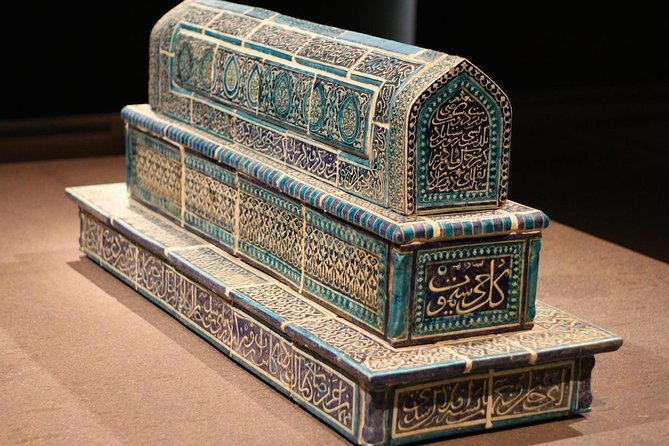
Reviewed · MUSEUMS
4-Hour Private Museum of Islamic Art in Qatar Tour
Great art meets a remarkable building. This private Doha tour gives you four hours of museum time and private transport, with a guide such as Ali adding useful facts about the city along the way. I especially like the chance to explore at your own group’s pace and the museum’s wide span of Islamic art, from seventh-century coins to Ottoman manuscripts. The main drawback is the ticket-price confusion, since the tour details say admission is included in one place but list the museum ticket as an extra $14 elsewhere.
The Museum of Islamic Art is a strong choice if you want more than a quick photo stop. You get architecture, sea views, calligraphy, ceramics, textiles, jewelry, glass, and objects linked to science and daily life. Allowing about three hours inside gives the collection room to breathe, although visitors focused only on the highlights may finish in one to two hours.
At $135 per person, this is not the cheapest way to visit the museum. You are paying for private transportation, a private group, and a guide who can put Doha and the collection into context. It makes the most sense for families, first-time visitors, and people on a short Doha stop who want a simple, organized outing.
In This Review
- Key points to know before you go
- Arriving beside Doha’s Corniche
- The private drive and guide experience
- Inside the Museum of Islamic Art
- Manuscripts and calligraphy
- Coins and the people behind them
- Glass in many forms
- Ceramics, metalwork, and objects for daily use
- How long should you spend inside?
- What the $135 price really buys you
- Who will enjoy this Doha museum tour?
- My practical verdict on the experience
- Should you book it?
- FAQ
- How long does the Museum of Islamic Art tour last?
- Is private transportation included?
- Is the museum admission ticket included?
- Is this a private tour?
- Can most people participate?
- Can I cancel for a full refund?
Key points to know before you go
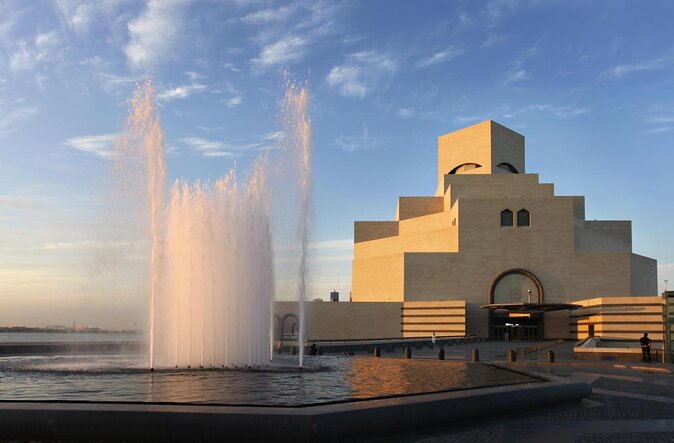
- The building is part of the attraction: The geometric pyramid-like structure was designed by architect I. M. Pei and sits beside the water with views toward Doha’s skyline.
- The collection reaches across centuries: You can see manuscripts, coins, glass, ceramics, metalwork, woodwork, textiles, jewelry, and fabric from the seventh century through the nineteenth century.
- Private transport keeps the outing easy: Pickup is offered, and only your group takes part in the activity.
- The guide can add value before you enter: Ali is praised for explaining Doha’s history clearly during the drive and for taking his time.
- Plan for one to three hours inside: A quick visit works for highlights, while careful viewing can fill much of the allotted time.
- Check the admission charge before departure: The information gives conflicting details about whether the $14 museum ticket is included.
Arriving beside Doha’s Corniche
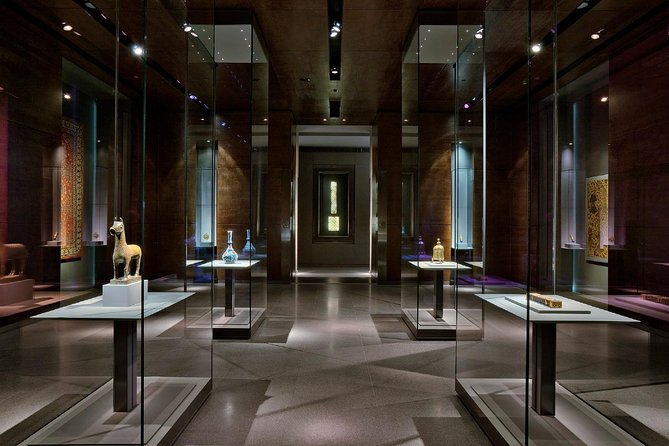
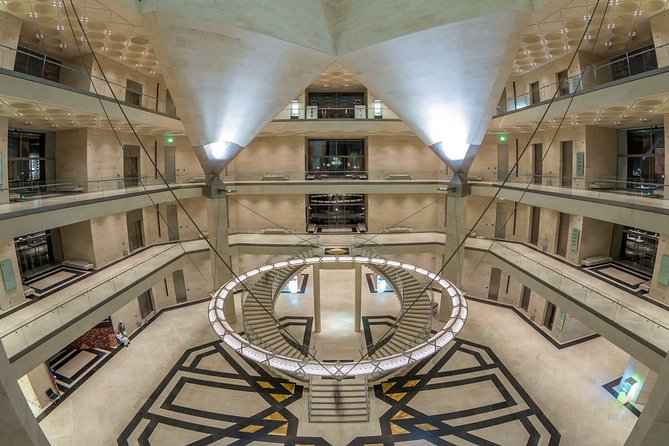
The Museum of Islamic Art occupies a dramatic position beside the water. Its pale geometric form rises above the shoreline, creating a sharp contrast with Doha’s modern towers and open Gulf setting.
I would give yourself a few minutes outside before heading indoors. The exterior views are one of the strongest parts of the visit, especially from the terraces and the surrounding open areas. The building photographs well from several angles, but its real appeal is the way its simple shapes change as you walk around it.
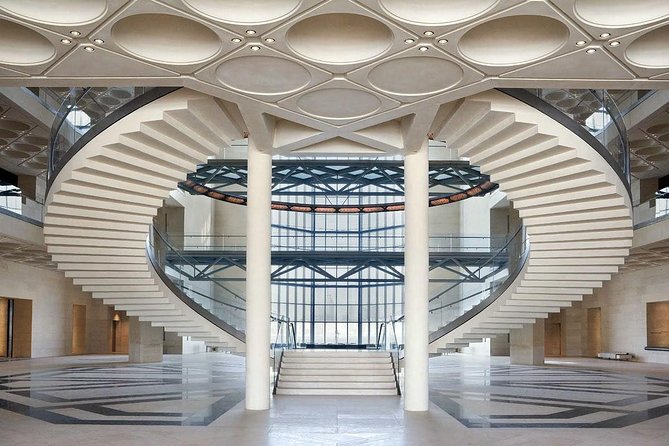
The structure was designed by I. M. Pei, the architect also associated with the Louvre Pyramid in Paris. Here, the form is more restrained. Large blocks, arches, and clean lines create a calm setting for the objects inside.
The views toward the Doha skyline add another layer to the stop. You are looking at a city that has changed quickly, while the museum presents objects connected to Muslim societies across many centuries. That contrast gives the visit a useful Qatar setting without turning the museum into a display about modern development alone.
The outdoor area also includes attractive arches and a pool or water feature. Bring modest clothing, since one visitor specifically advised paying attention to appropriate dress. This is a cultural institution in Qatar, not simply a waterfront photo site.
More museums and collections:
- Half-Day Wonders of Doha: Culture, Skylines, Museums & Souqs
★ 5.0 · 97 reviews - Doha Night City Tour | Souq Waqif | National Museum | The Pearl | Katara Village
★ 5.0 · 50 reviews - Doha: Iconic Sights, Culture & Museum of Islamic Art Tour
★ 5.0 · 43 reviews
The private drive and guide experience
Pickup is offered, and private transportation is included. That matters in Doha, where a private vehicle can save you the trouble of coordinating transport before and after a museum visit.
Because the activity is private, you are not placed with a larger group. You can ask questions, slow down for objects that catch your eye, or move along when a section does not hold your interest. That flexibility is useful for families and mixed-age groups, especially when children and adults want different amounts of time with each display.
The drive itself can be more than a transfer. Ali receives particularly warm praise for explaining facts and history about Doha on the way to the museum. His clear, unhurried style sounds well suited to visitors who want context without a formal lecture.
Still, the tour description gives limited detail about the guide’s background, the exact pickup area, or whether the guide remains with you throughout the museum visit. I would confirm those points before booking if personal guiding is the main reason you are considering the experience.
The activity is generally suitable for most people, according to the supplied information. Since the visit lasts about four hours and includes museum walking, you should still judge the pace for your own group.
Inside the Museum of Islamic Art
The collection was assembled beginning in the late 1980s and covers a broad range of objects from the Islamic world. You will not find a single narrow story here. Instead, the displays connect religious practice, court life, trade, craftsmanship, science, and ordinary household use.
The strongest sections for many visitors are likely to be the manuscripts, coins, glass, ceramics, and jewelry. Each offers a different way to understand Islamic societies.
Manuscripts and calligraphy
The museum holds more than 800 manuscripts. They range from Qur’ans dating to the seventh century through Ottoman works from the nineteenth century.
These books are valuable not only for their religious importance but also for the work that went into their production. Look at the writing, page design, decoration, and materials. Calligraphy is treated as both communication and art, and the displays can help you see how written words gained visual force.
If you are new to Islamic art, this is a good place to slow down. The script may not be readable to you, but the form, rhythm, and page arrangement still communicate care and skill.
A few more Qatar trips worth weighing up
- Private Half Day Desert Safari
★ 5.0 · 1,350 reviews - Desert Safari & Keshta | (Private)
★ 5.0 · 721 reviews - (Private) Quickie to the Desert | Sandboarding | Inland Sea
★ 5.0 · 436 reviews - Private Full Day Desert Safari
★ 5.0 · 392 reviews
Coins and the people behind them
The collection of gold and silver coins offers a more intimate look at Muslim societies from the seventh century onward. Coins can feel less glamorous than jewelry or painted objects, but they carry names, symbols, rulers, dates, and clues about trade.
I find coins especially useful in a museum because they connect large historical changes to something people handled every day. A small piece of metal can show how authority was presented and how money moved between regions.
Give this section more time than you might expect. The objects are small, so they reward close viewing rather than a fast walk past glass cases.
Glass in many forms
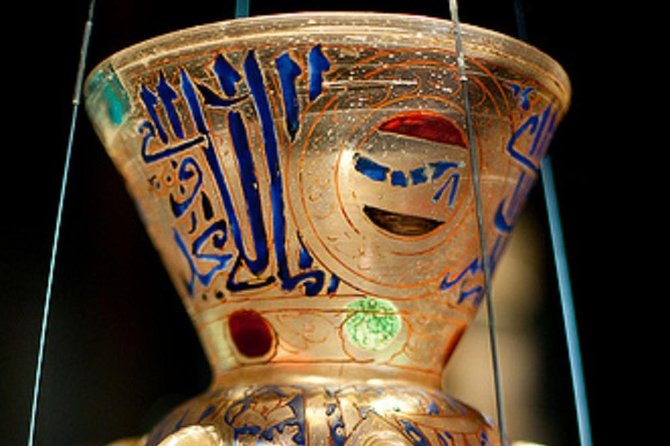
The museum’s glass collection includes highly decorated enameled glass, along with cut and molded pieces. The enameled examples bring strong color and surface detail, while simpler objects show how much skill can be present in shape and finish alone.
This section should appeal to visitors who usually think of Islamic art mainly in terms of carpets, calligraphy, or architecture. The glass shows another side of the tradition, one based on heat, technique, color, and controlled decoration.
Lighting is important here. The displays are arranged so that the objects can be seen clearly, and the quality of the presentation helps bring out small details. You may find that the simpler pieces hold your attention longer than expected.
Ceramics, metalwork, and objects for daily use
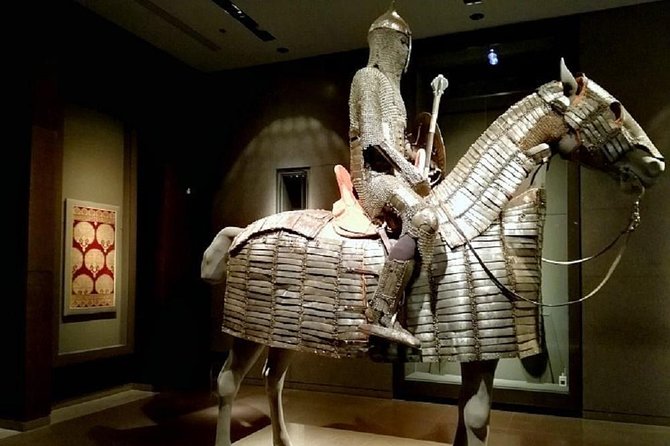
Ceramics and metalwork help ground the collection in everyday life. Bowls, vessels, tools, and decorated objects show how beauty entered practical settings.
The collection also includes woodwork, textiles, fabric, and jewelry. These materials differ in texture and purpose, so the visit does not become visually repetitive. One gallery may focus on a delicate object, while another gives you larger patterns, surfaces, or construction methods to study.
The displays also connect art with science. Visitors can find references to astronomy and mathematics, along with geometric shapes and patterns used across different Muslim regions. You do not need a technical background to appreciate this. The point is to notice how art, measurement, belief, and practical knowledge often worked together.
How long should you spend inside?
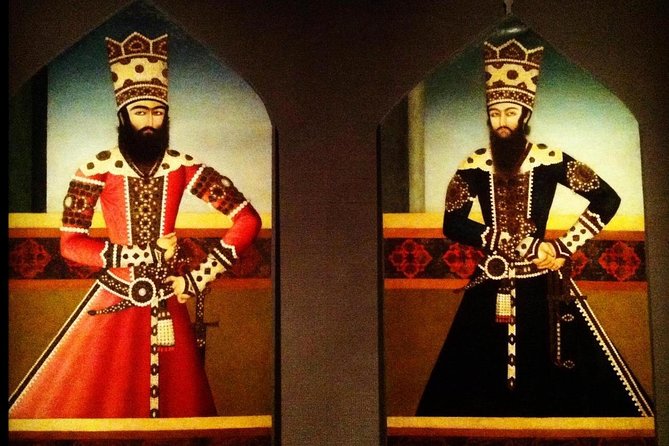
The planned museum stop is about three hours, within a total experience of roughly four hours. That is a generous allowance for a museum visit, but it does not mean you must study every case.
A focused visit may take one to two hours. That is enough for the building, the main galleries, the coins, manuscripts, glass, and a few standout objects. If you enjoy reading labels or comparing materials, three hours will pass quickly.
The museum is easy to walk through, based on visitor feedback, and the exhibitions are arranged in a clear way. Families may appreciate large visual displays and interactive elements, particularly younger visitors who need more than rows of cases.
I would not rush the first floor or the major introductory displays. They can help explain the range of Islamic art before you begin choosing your favorite sections. Save time for the upper areas and outdoor terraces, where the views add something different from the collection itself.
There is also a café inside. It can be a useful pause, though seating may be limited at busy times. A restaurant on the top floor was reported closed during one visit, so do not build your schedule around a particular dining option unless you confirm it in advance.
What the $135 price really buys you
The listed price is $135 per person. Taxes and private transportation are included, while tips are not.
The value depends on your group. For one or two people, the cost is high compared with arranging a museum visit independently. For a family or small group, the private format may become more reasonable because you are paying for one vehicle and one activity rather than joining a larger shared tour.
The best value comes from the time saved and the personal pace. Pickup can remove transport planning, and a guide can add information during the drive. If you are on a short stop in Doha, that convenience may matter more than the basic admission price.
You should check the admission charge carefully before paying. The details say the museum admission ticket costs $14 and is not included, but the itinerary also says an admission ticket is included. Since those statements conflict, ask the provider, Oman Day Tours, to confirm whether you need to pay the museum directly.
That single question can prevent an awkward surprise at the entrance. It also helps you compare the tour fairly with a self-guided visit.
Group discounts are offered, and a mobile ticket is available. Confirmation normally arrives at booking, though reservations made within two days of departure may be confirmed within 48 hours and remain subject to availability.
Free cancellation is available up to 24 hours before the start time for a full refund. Changes or cancellations made less than 24 hours before departure are not accepted for a refund.
Who will enjoy this Doha museum tour?
I would recommend this experience most strongly to people who want an organized introduction to the Museum of Islamic Art without joining a large group.
It suits:
- First-time visitors to Doha who want city context during the drive.
- Families who may benefit from private pacing and visual, interactive displays.
- Museum fans interested in manuscripts, coins, glass, ceramics, textiles, or jewelry.
- Short-stay visitors who want pickup and transport handled in one booking.
- Small groups who can share the private-tour cost.
It may be less suitable if you prefer to spend an entire day in a museum, want a specialist art historian, or are mainly looking for a low-cost admission ticket. The four-hour format is practical, but the tour description does not promise a specialist lecture or a full-day scholarly program.
The collection also requires some openness. Islamic art covers many places and periods, and not every object will have the familiar look of a famous European museum masterpiece. Some displays may feel subtle if you prefer large paintings or instantly recognizable icons. Give the objects time, and pay attention to materials, patterns, writing, and use.
My practical verdict on the experience
The Museum of Islamic Art is worth visiting even if you are not normally a museum person. The building, water views, skyline, and café make the stop feel like more than a series of indoor galleries. The collection then rewards curiosity with objects connected to faith, trade, science, craftsmanship, and daily life.
I like the private setup because it gives you control over the pace. I also like the possibility of learning about Doha before you reach the entrance, particularly if your guide is as clear and patient as Ali.
The weak point is not the museum itself. It is the unclear ticket information and the relatively high price for a single person. Confirm admission, ask what guiding is included, and decide how much value you place on private transport.
Should you book it?
Book this tour if you want a convenient, private introduction to one of Doha’s finest cultural stops, especially with family or a small group. The building and skyline views alone make it memorable, while the manuscripts, coins, glass, ceramics, and textiles give you plenty to see inside.
Skip it if your priority is the lowest possible cost or if you would rather explore the museum alone for a full day. In that case, independent admission may suit you better. For everyone else, confirm the $14 ticket detail first, then consider this a comfortable and well-paced way to meet Qatar through both its modern city and its centuries of Islamic art.
FAQ
How long does the Museum of Islamic Art tour last?
The experience lasts approximately four hours, with about three hours allocated to the museum stop.
Is private transportation included?
Yes. Taxes and private transportation are included, and pickup is offered.
Is the museum admission ticket included?
The information is inconsistent. One section says admission is included, while another lists the Museum of Islamic Art ticket as an additional $14. Confirm this with Oman Day Tours before departure.
Is this a private tour?
Yes. Only your group participates in the activity.
Can most people participate?
The supplied information says most travelers can participate.
Can I cancel for a full refund?
Yes, if you cancel at least 24 hours before the experience start time. Cancellations or changes made less than 24 hours before departure are not accepted for a refund.
Just added around Doha
- Explore desert Qatar: Off-Road Adventures, dune bashing Tour★ 5.0 · 3 reviews
- Doha: Desert Buggy Ride, Camel Ride, Dune Bashing, Sandboard★ 5.0 · 3 reviews
- Private Wakesurfing or Wakeboarding along Doha’s skyline★ 5.0 · 3 reviews
- “Doha Desert Safari with all activities”★ 5.0 · 3 reviews
- Private Desert Safari, Sand Dunes Bashing and Inland Sea Visit★ 5.0 · 3 reviews
- Guided Doha Sightseen Tour By Certified Tour Guide (Private Tour)★ 5.0 · 3 reviews
- Grand Qatar Tour★ 5.0 · 3 reviews
- Doha: Private City tour from Cruise Port terminal★ 5.0 · 3 reviews
Museums, compared.
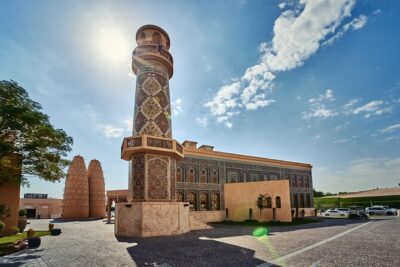
Half-Day Wonders of Doha: Culture, Skylines, Museums & Souqs
Read our review →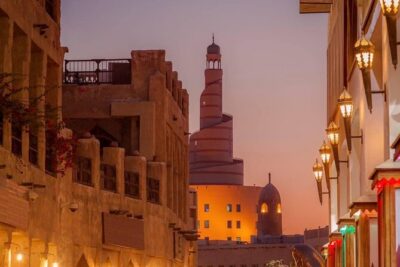
Doha Night City Tour | Souq Waqif | National Museum | The Pearl | Katara Village
Read our review →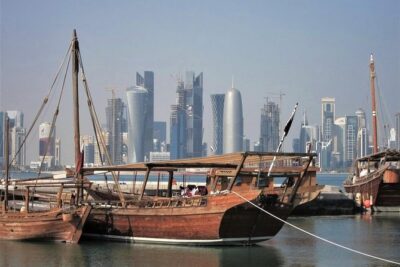
Iconic Sights, Culture & Museum of Islamic Art Tour
Read our review →
3-2-1 Qatar Olympic and Sports Museum: Admission Ticket
Read our review →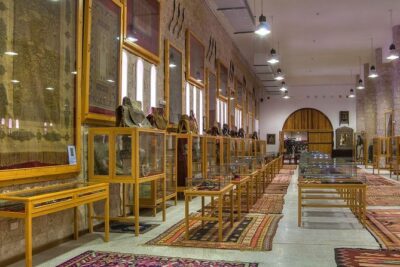
Cultural & Thrills: Sheikh Faisal Museum & Camel Race Adventure
Read our review →
Private Doha City Tour, Souq Waqif, Katara, National Museum
Read our review →

Doha, Qatar: Came Racing Track, Oryx & Sheikh Faisal Museum Tour.
Read our review →Browse the lists this tour appears in