
Reviewed · CAMEL RIDING
West Of Qatar, Mushroom Rocks, Camel Racing Track, Richard Serra
Desert roads lead to surprising places. I like the chance to see Al Shahaniya Camel Racing Track, where Qatar’s old camel-racing tradition meets modern competition, and I like the striking contrast between natural rock formations and Richard Serra’s huge steel artwork. The main drawback is that the 3 to 4 hour outing covers widely separated sites, so time at each stop can feel short.
This private tour costs $66 per person and includes pickup, admission, and a mobile ticket. I also like the flexibility of a private group, but your experience depends heavily on the guide and on what is happening at the racetrack that day. A race is possible, not guaranteed.
In This Review
- Key points at a glance
- Why western Qatar is worth the drive
- Al Shahaniya Camel Racing Track and Qatar’s living tradition
- Zekreet Fort, built from faroush stone
- Mushroom Rocks and the odd beauty of wind-shaped stone
- Richard Serra’s East-West/West-East in the open desert
- Timing, transport, and the value of $66
- What the guide can add to the day
- Who will enjoy this western Qatar outing?
- Should you book West Of Qatar?
- FAQ
- How long does the tour last?
- How much does the tour cost?
- Is hotel pickup available?
- Is this a private tour?
- Will I definitely see a camel race?
- What happens if bad weather cancels the tour?
Key points at a glance
- Camel racing with a real chance to see training: Al Shahaniya hosts domestic and international events, and young camels may be paired with more experienced animals.
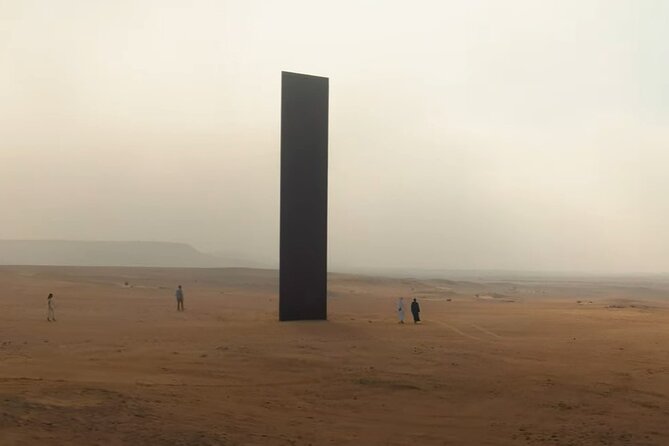
- Richard Serra’s East-West/West-East: Four enormous steel plates create one of Qatar’s most memorable art experiences.
- Zekreet Fort ruins: A compact desert ruin built from faroush stones, with later-added corner towers.
- Mushroom Rocks in western Qatar: Wind and sand shaped these unusual sandstone forms, though the timed itinerary does not list a separate stop duration for them.
- Private transport and pickup: Only your group participates, which allows a more relaxed pace than a large coach tour.
- A guide can make or break the day: Hamood earned especially strong praise for his cultural knowledge, kindness, and photography.
Why western Qatar is worth the drive
Doha gives you museums, mosques, markets, and modern architecture. Western Qatar gives you something else: a wide, spare desert setting where small ruins, racing animals, natural stone, and large-scale sculpture share the same trip.
That change of scene is the main reason to book this outing. The sites are not close together, so you spend part of the experience in the vehicle. Still, the drive helps you see how quickly Qatar changes beyond the capital. The city’s dense streets give way to open ground, low scrub, pale stone, and long horizons.
I would not choose this tour if you want a packed schedule of polished attractions. I would choose it if you enjoy unusual stops and want to understand how culture, geology, and modern art can meet in one remote part of the country.
The private format matters here. Only your group takes part, so you can ask questions, stop for pictures, and discuss the sights without a busload of strangers setting the pace. The tour offers pickup, which is useful in Doha, where arranging transport to distant western sites on your own can add both time and cost.
More west coast and Richard Serra trips:
- From Doha: Day Trip to North And West Qatar With Pickup
★ 4.9 · 336 reviews - Qatar West Coast tour to Richard Serra Sculpture and Mushroom Rock Formation
★ 5.0 · 153 reviews - Qatar West Coast tour, Zekreet, Richard Serra Sculpture, Mushroom Rock Formation
★ 5.0 · 150 reviews
Al Shahaniya Camel Racing Track and Qatar’s living tradition
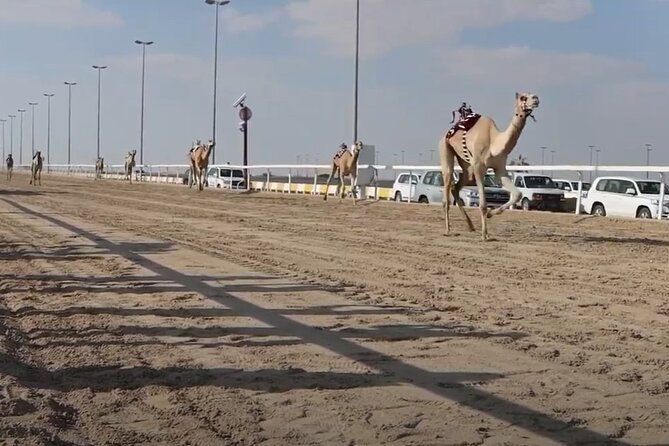
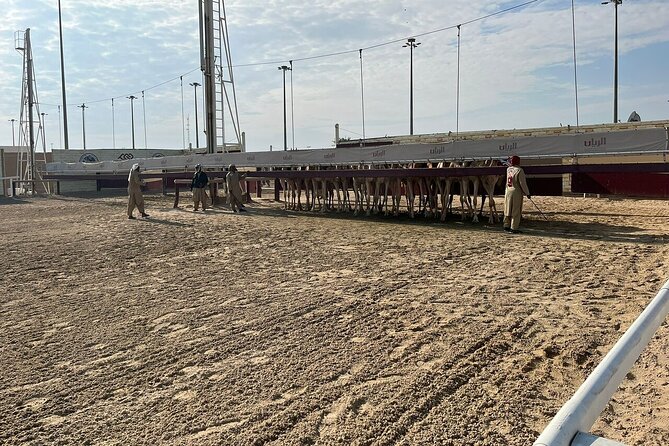
The camel track is the most culturally distinctive stop. Professional camel racing began in Qatar in 1973, when 300 camels took part in the first races. Today, Al Shahaniya hosts domestic and international tournaments and remains an important place for training and competition.
You may see young camels paired with more experienced animals as part of their training. That detail makes the stop more than a quick photo opportunity. It gives you a look at how a traditional regional sport continues through organized practice and professional events.
The tour allows about 30 minutes here, with admission included. That is enough to get a sense of the venue and watch activity if the timing is right. It may not be enough if a race is underway and you want to linger. One person specifically wished for more time at the track and noted that the overall outing ended about 45 minutes early, leaving extra time that could have been used there.
That is useful advice. If camel racing is your main reason for booking, tell your guide early. Ask whether a race is taking place and whether the route can allow more time at Al Shahaniya. The order of stops may change, so you should not assume the camel track will come first or last.
A race is not promised. You might see training rather than a formal event, or you might arrive between races. Even so, the track gives you cultural context that a standard sightseeing loop around Doha cannot provide. The animals are not simply decorative symbols. They are part of a continuing sport with its own training system and competitions.
The guide also matters here. Hamood received particularly warm praise for explaining Qatar’s culture and history, taking good photographs, and treating people kindly. If you are assigned him, his strengths should add real value to a stop that could otherwise feel brief.
Zekreet Fort, built from faroush stone
Zekreet Fort is a small ruin with a clear practical purpose. It was built for defense from faroush stones, a local term for beach rock. The original plan was rectangular, and towers were added later at the four corners to strengthen the structure.
You get about 45 minutes here. That gives you time to walk around, study the stonework, and take photographs without turning the stop into a rushed roadside pause. The fort is not presented as a restored palace or a grand archaeological complex. Its appeal comes from its simplicity and its setting.
Look closely at how the rough stone affects the shape of the fort. The material connects the building to its surroundings, while the added towers show how defensive needs changed over time. It is a modest site, but the guide’s explanation can help you notice details that would be easy to miss.
I would keep your expectations sensible. If you need elaborate interiors, large exhibits, or extensive restoration, Zekreet Fort may feel slight. If you enjoy old structures in open surroundings, the stop gives the day a human and historical layer between the camel track and the art installation.
The fort also helps break up the long drive. After watching animals and before reaching Serra’s sculpture, you get a place where the focus shifts to construction, defense, and local materials.
Mushroom Rocks and the odd beauty of wind-shaped stone
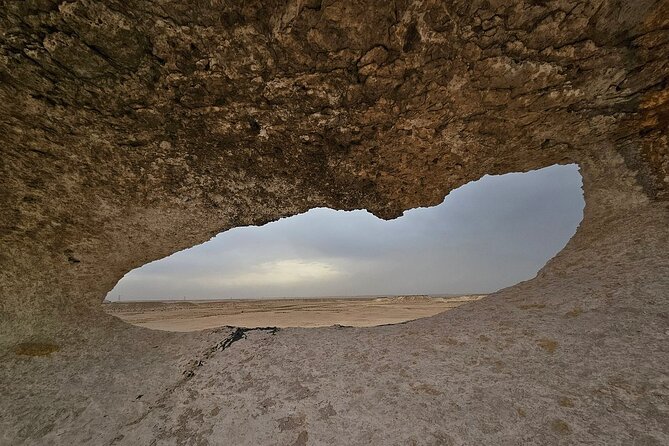
Mushroom Rocks are among the most unusual natural features associated with this western Qatar outing. Wind and sand have sculpted sandstone into broad-topped forms that resemble giant mushrooms. Their shapes cast strong shadows across the open ground, giving the area an almost unreal appearance.
This is the sort of place where scale can fool you. A rock formation that looks simple in a photograph can feel much more striking when you stand near it and see how the narrow base supports the wider top. The forms also show the slow force of erosion, with sand and wind doing work that would take an artist or builder far longer to imitate.
There is one important planning point: the supplied timed itinerary gives 30 minutes at Al Shahaniya, 45 minutes at Zekreet Fort, and 45 minutes at Serra’s sculpture, but it does not provide a separate duration for Mushroom Rocks. The tour description includes them as a highlight, yet the exact stop arrangement may vary.
Ask your guide at pickup how Mushroom Rocks fit into the day. That question is especially important if you want enough time for photographs. With western Qatar’s sites spread out, the route can change based on road conditions, timing, and the guide’s judgment.
The rocks are best for people who enjoy natural oddities rather than formal attractions. There is no suggestion of a visitor center or structured display here. You go for the shapes, the light, the open space, and the chance to see geology that looks almost designed.
More camel rides out on the dunes:
- Doha: ATV, Quad/Buggy Dune Bashing, Camel Ride, Sandboarding
★ 5.0 · 3,784 reviews - Desert safari, Dune bashing, sandboarding, camel, ATV Option
★ 5.0 · 2,826 reviews - Qatar Gold Dune Safari, Dune Bashing,Camel Ride,Sand Boarding,Inland Sea Desert
★ 5.0 · 2,807 reviews - Doha :Half Day Desert Safari | Camel Riding | ATV | Sand Surfing
★ 5.0 · 1,907 reviews
Richard Serra’s East-West/West-East in the open desert
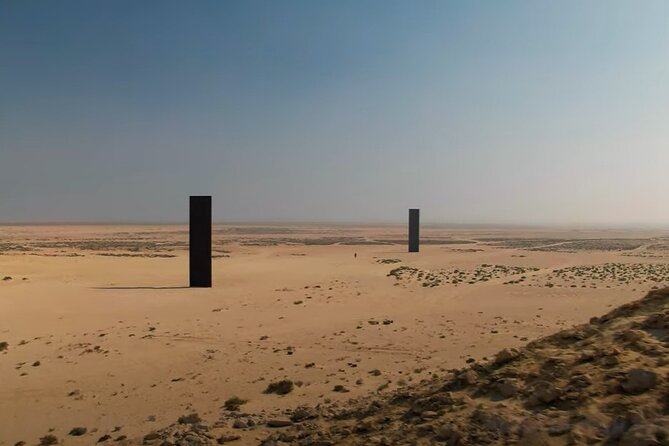
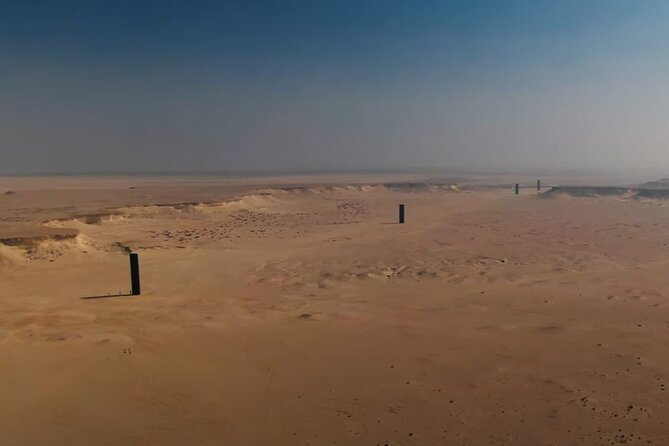
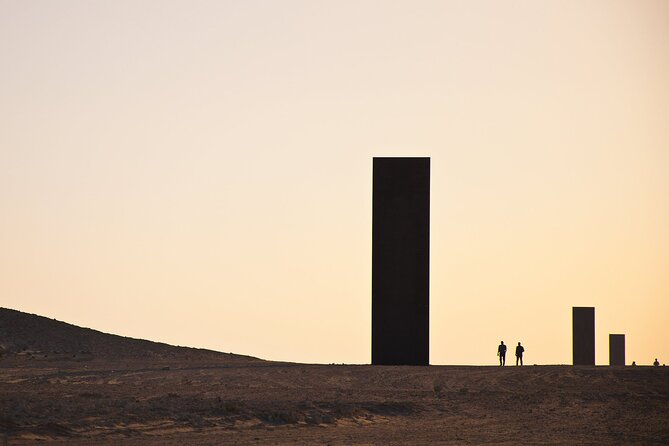
Richard Serra’s East-West/West-East is the tour’s boldest visual stop. Four massive steel plates stretch across the desert, creating a powerful line through the open space. The work was made for interaction with the setting and with the people who walk among it, not for a pedestal or enclosed gallery.
You get about 45 minutes at the sculpture. That is enough time to approach the plates, see how they change against the horizon, and take photographs from different angles. The work may look simple at first. Its effect grows as you move around it and compare the hard steel with the open desert and weathered stone.
Serra’s idea was to take sculpture away from the traditional gallery setting and place it where people encounter it directly. Here, the distance between the artwork and the viewer is part of the experience. You are not looking at a small object from behind a rope. You are walking through a work that depends on space, distance, and scale.
I think this is the most rewarding stop for anyone interested in modern art. You do not need an art degree to appreciate it. The key question is basic: how does your sense of distance change as you move beside the steel plates?
The setting also prevents the artwork from feeling like an isolated attraction. The sculpture responds to the desert’s openness, while the desert makes the steel look even larger and more severe. Some people may find the work thought-provoking. Others may see four huge metal slabs and wonder what all the fuss is about. Both reactions are fair.
A guide who understands Serra’s intent can make the stop much stronger. Ask how the artwork relates to the site and why its position matters. If the explanation is brief, take your time walking around the installation rather than treating it as a single photo stop.
Timing, transport, and the value of $66
At $66 per person, this tour is priced as a compact private excursion rather than a basic ride into the desert. The price includes pickup and admission, and the private format means only your group takes part. That combination can be good value if you want western Qatar’s distant sites without arranging a car, driver, and separate entries yourself.
The value is less convincing if your top goal is a long camel-racing session. The stated duration is approximately 3 to 4 hours, and the separate stops already account for about two hours. Add the driving time between western sites, and you can see why the day may feel quick.
The private format gives you some control, but it does not guarantee a longer visit at every stop. Ask about your priorities at the start. If you care most about the camel track, say so. If the Serra installation is your main interest, request time to walk beyond the obvious photograph.
Pickup is offered, and confirmation arrives when you book. The experience is also near public transportation, although the distance between the sites makes organized transport the practical part of the package. A mobile ticket keeps the arrival process simple.
The tour is listed as suitable for most people, but the provided details do not describe specific accessibility arrangements. If you have mobility needs, ask the provider before booking. Desert sites and old ruins can require careful attention to ground conditions, but the available information does not promise specific access features.
Plan around the weather. This experience requires good weather, and a poor-weather cancellation results in either another date or a full refund. For a full refund when you cancel, you must do so at least 24 hours before the start time. Changes or cancellations inside that window are not accepted and are not refunded.
What the guide can add to the day
This tour covers culture, old stone, geology, and contemporary art. Those subjects do not automatically connect themselves. A good guide provides the thread that ties them together.
The strongest praise went to Hamood, who was described as kind, friendly, well informed about Qatari culture and history, and skilled at taking photographs. That combination matters on a private tour. You are not simply being moved from one site to another. You want explanations that fit the place and help you see more than the surface.
There was also a serious pickup problem reported by one customer. The guide failed to meet the group at the hotel reception, leaving them to search for him. The route order was changed as well, with the Serra sculpture visited first. The provider apologized and said the guide would be removed from the tour.
That incident does not define every departure, but it is a reason to confirm the meeting point clearly. Keep your phone available at pickup and make sure you know who to look for. If the order changes, ask what will happen to time at each stop. Clear communication at the beginning can prevent a frustrating start.
The overall rating is 4.8 from 33 ratings, with 97 percent recommending the experience. That suggests the tour usually works well, while also showing that guide performance and personal priorities can affect the outcome.
Who will enjoy this western Qatar outing?
I would recommend it to you if you have already seen central Doha and want a half-day beyond the city. It suits people who enjoy unusual sights, photography, local sports, archaeological remains, and modern art in unexpected places.
It is also a good fit for a private group with mixed interests. One person can focus on camels, another on the fort, and someone else on Serra’s steel plates. The compact schedule lets you sample several parts of western Qatar without committing to a full-day desert program.
Families and first-time visitors may appreciate the variety, but you should prepare younger children for driving between stops and for sites without the built-in entertainment of a museum. Art fans will likely value the sculpture, while people interested in local culture may consider the camel track the highlight.
I would hesitate if you want guaranteed race action, long visits, or a tightly fixed route. I would also hesitate if your Doha schedule is so short that losing several hours to driving feels costly. The tour works best when you accept that the journey between places is part of the experience.
Should you book West Of Qatar?
Book this tour if you want a private, efficient introduction to western Qatar and like the idea of combining camel racing, a defensive ruin, Mushroom Rocks, and Richard Serra’s steel artwork. At $66 per person, pickup and admission make the cost reasonable for a private half-day, especially if you are traveling with your own group.
Before booking, ask two direct questions: Will Mushroom Rocks receive a proper stop, and is a camel race scheduled during your visit? Then tell the guide which location matters most to you. If you want more time at Al Shahaniya, say so early.
The tour is not perfect. The schedule can feel short, the sites are far apart, and an unreliable guide can spoil an otherwise unusual outing. But with a good guide such as Hamood and clear expectations, this is a worthwhile way to see a side of Qatar that a city sightseeing tour cannot provide.
FAQ
How long does the tour last?
The experience lasts approximately 3 to 4 hours.
How much does the tour cost?
The listed price is $66 per person.
Is hotel pickup available?
Yes. Pickup is offered.
Is this a private tour?
Yes. Only your group participates in the activity.
Will I definitely see a camel race?
No. You may see young camels training with more experienced animals, and you might witness a race if one is taking place during your visit.
What happens if bad weather cancels the tour?
You will be offered a different date or a full refund. You can also cancel up to 24 hours before the start time for a full refund. Cancellations within 24 hours are not refunded.
Just added around Doha
- Explore desert Qatar: Off-Road Adventures, dune bashing Tour★ 5.0 · 3 reviews
- Doha: Desert Buggy Ride, Camel Ride, Dune Bashing, Sandboard★ 5.0 · 3 reviews
- Private Wakesurfing or Wakeboarding along Doha’s skyline★ 5.0 · 3 reviews
- “Doha Desert Safari with all activities”★ 5.0 · 3 reviews
- Private Desert Safari, Sand Dunes Bashing and Inland Sea Visit★ 5.0 · 3 reviews
- Guided Doha Sightseen Tour By Certified Tour Guide (Private Tour)★ 5.0 · 3 reviews
- Grand Qatar Tour★ 5.0 · 3 reviews
- Doha: Private City tour from Cruise Port terminal★ 5.0 · 3 reviews
Camel Riding, compared.

ATV, Quad/Buggy Dune Bashing, Camel Ride, Sandboarding
Read our review →
Desert safari, Dune bashing, sandboarding, camel, ATV Option
Read our review →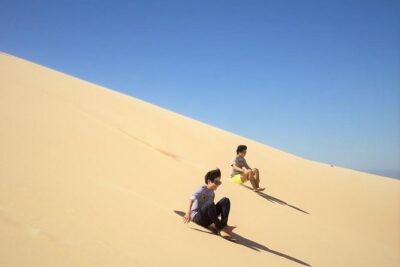
Qatar Gold Dune Safari, Dune Bashing,Camel Ride,Sand Boarding,Inland Sea Desert
Read our review →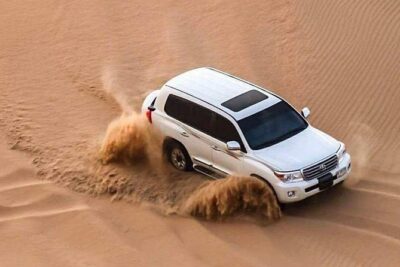
Half Day Desert Safari | Camel Riding | ATV | Sand Surfing
Read our review →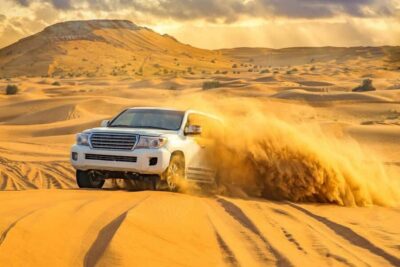
ATV,Quad or Buggy Dune Bashing,CamelRide & Sandboarding
Read our review →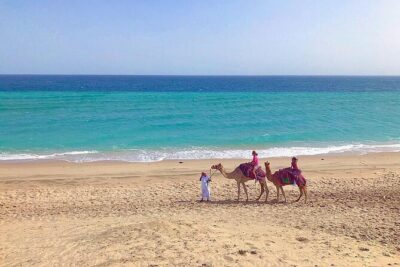
Safari, Camel Ride, Sandboarding and Inland Sea Tour
Read our review →
Doha Desert Safari Dune Bashing Camel Ride Sandboarding
Read our review →
Sunset Desert Safari, ATV, Camel Ride and Sandboarding
Read our review →Browse the lists this tour appears in