
Reviewed · WEST COAST & RICHARD SERRA
Richard Serra Sculpture Mushroom Rock Formation Tour
Art meets desert here. I like this four-hour West Qatar outing for its unusual mix of Richard Serra’s giant steel sculpture and the naturally shaped Mushroom Rock Formation. I also like the stop at Al Shahaniya Camel Race Track, where an old Qatari tradition now uses modern robotic jockeys.
The main consideration is the amount of driving between the sights. Each stop lasts about 30 minutes, so much of the tour is spent moving through the desert west of Doha. If you want museums, markets, or a close look at old Doha, this is not the right half-day. Guide Faisal receives especially warm praise for making the trip personal and enjoyable.
In This Review
- Key points at a glance
- Why this West Qatar outing feels different
- Richard Serra’s steel forms in the desert
- Mushroom Rock and the work of erosion
- Camel racing at Al Shahaniya
- Four hours, private transport, and the pace
- Is $61 a fair price?
- Who will enjoy this tour most?
- Small details that improve the day
- Should you book the West Qatar tour?
- FAQ
- How long is the Richard Serra Sculpture and Mushroom Rock tour?
- What locations are included?
- Is pickup offered?
- Is this a private tour?
- How much does the tour cost?
- Are admission tickets included?
- Can I use a mobile ticket?
- What is the cancellation policy?
Key points at a glance
- Richard Serra’s East-West / West-East: Walk among huge curved steel plates that change shape and scale as you move.
- Mushroom Rock Formation: See a mushroom-shaped natural feature formed by long-term wind and erosion.
- Al Shahaniya Camel Race Track: Catch a glimpse of camel racing, a major part of Qatari heritage, with robotic jockeys helping guide the camels.
- Private four-hour format: Only your group takes part, which gives the outing a more personal feel than a large coach tour.
- Pickup and mobile ticket: Pickup is offered, and the mobile ticket makes entry and confirmation simple.
- $61 per person: The price is fair if you value private transport, three very different stops, and a guide. It is less attractive if you want a full cultural tour of Doha.
Why this West Qatar outing feels different
Doha has plenty of polished modern attractions, but this tour heads away from the city’s familiar sights. In one half-day, you get geology, traditional sport, and large-scale contemporary art.
That combination is the real appeal. The stops do not feel like variations of the same attraction. Mushroom Rock is shaped by natural forces. The camel track connects you with a long-standing Qatari pastime. Richard Serra’s work is carefully planned and made by people, yet it looks strikingly at home in the open desert.
I like that contrast. You are not simply moving from one photo stop to another. You are seeing three different ways that people understand and shape their surroundings.
The format is private, so only your group participates. That matters if you want to ask questions, take your time with photographs, or avoid being tied to a large group. The tour lasts about four hours, which makes it manageable during a short Doha stay or as a break from the city’s indoor attractions.
Still, expectations matter. This is a western Qatar sightseeing trip, not a full introduction to Qatari culture. One visitor’s advice was sensible: if you want more traditional or historical experiences, allow time for other parts of Doha as well.
More west coast and Richard Serra trips:
- From Doha: Day Trip to North And West Qatar With Pickup
★ 4.9 · 336 reviews - Qatar West Coast tour to Richard Serra Sculpture and Mushroom Rock Formation
★ 5.0 · 153 reviews - Qatar West Coast tour, Zekreet, Richard Serra Sculpture, Mushroom Rock Formation
★ 5.0 · 150 reviews
Richard Serra’s steel forms in the desert
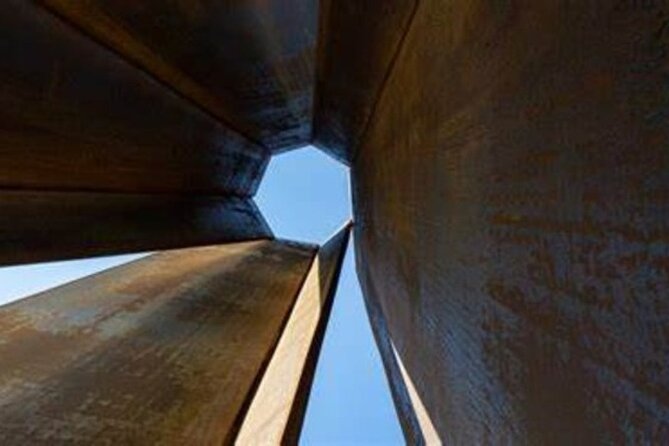
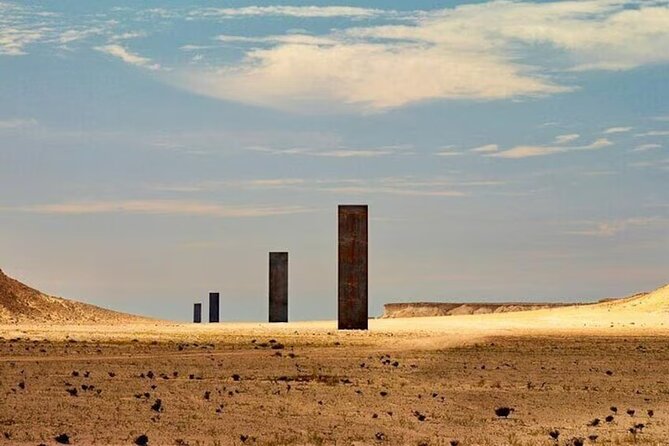
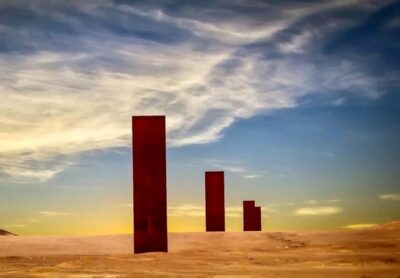
The Richard Serra installation, known as East-West / West-East, is the visual centerpiece for many people. The work consists of several towering, curved steel plates set in the desert. Its scale is hard to understand from photographs alone because there is little nearby to provide a familiar sense of size.
You walk around and between the plates. As you change position, the forms appear to bend, narrow, widen, or alter the view ahead. The work is not designed only to be seen from a distance. Its effect comes from moving through it.
I like this kind of art because you do not need a long explanation before it begins to work. The desert gives you a quiet, open setting, while the steel creates weight, height, and tension. One moment you are focused on a narrow passage between plates. A few steps later, the structure opens toward the empty horizon.
The planned stop is about 30 minutes, with admission included. That should be enough for a walk around the installation and a series of photographs. You may want longer if you enjoy contemporary art or like to study how light and shadow change across the metal.
The short visit is also a useful limit. Serra’s work is powerful, but it is not a conventional monument with a long list of rooms or displays. Once you have walked through the plates and viewed them from several angles, you may feel ready to move on.
For photography, I would pay attention to scale. Include a person in the frame if you can, since that helps show how large the sculpture is. The plain desert setting is part of the composition, so wide photographs are likely to work better than close-up shots alone.
This stop suits people who enjoy art that asks you to move, look, and notice space. It may be less rewarding if you prefer paintings, historical objects, or guided explanations of an artist’s life.
Mushroom Rock and the work of erosion
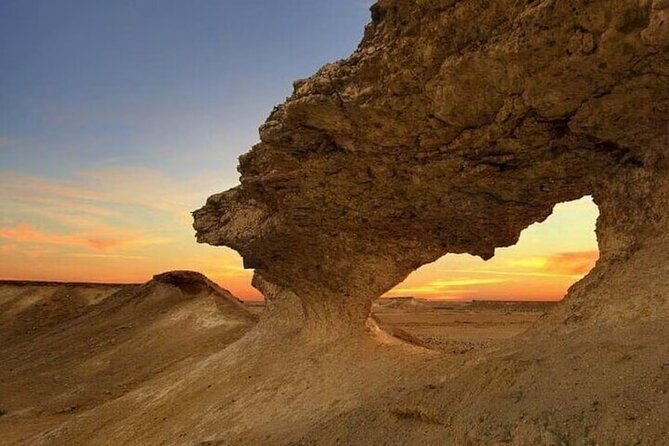
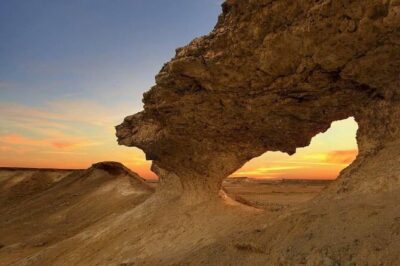
Mushroom Rock Formation provides a complete change of mood. Instead of massive steel plates, you see a natural rock with a broad cap resting on a narrower stem.
The shape comes from erosion over a very long period. Softer layers beneath the harder top have worn away, leaving the mushroom-like profile. It is a simple sight to understand, but it gives you a clear example of how wind and weather can reshape desert rock.
The stop lasts about 30 minutes and admission is free. That is enough time to see the formation, take photographs, and look around the surrounding desert. The appeal is visual rather than visitor-facility based. Do not expect a museum, a long walking route, or a large collection of interpretive displays.
I like the way this stop echoes the Serra installation without copying it. Both are marked by unusual vertical forms. One was created by erosion and time, while the other was planned and built by an artist. Seeing them during the same outing gives the day a loose theme: how shape changes the way you read an open space.
The rock is also a good stop for anyone who wants a natural feature without committing to a demanding outdoor excursion. The supplied information does not describe the walking conditions in detail, so you should follow your guide’s directions and wear practical footwear.
Give yourself time to look beyond the obvious mushroom shape. Notice the contrast between the hard cap and thinner base, then step back for a wider view. The formation is most striking when you can see it against the surrounding desert rather than only in a tight photograph.
This is likely the tour’s simplest stop, but simple does not mean unimportant. It breaks up the art and driving, and it shows a side of Qatar that is easy to miss if you stay within central Doha.
Camel racing at Al Shahaniya
Al Shahaniya Racetrack brings the tour into living Qatari tradition. Camel racing has taken place in the region for centuries and remains an important part of the country’s heritage.
The track is described as one of the most advanced in the region, with modern facilities for camels and spectators. The races take place around a dirt track, and the animals can reach high speeds. That makes the scene more exciting than the slow, stately image you might expect from seeing camels in a tourist area.
The most interesting detail for many visitors is the use of robotic jockeys. This is a strong example of old and new working together. The sport remains rooted in tradition, while technology has changed how races are managed.
The planned stop lasts about 30 minutes, so your visit is more of a glimpse than a full race-day program. The timing of actual races can affect what you see. The information provided does not promise that a race will be running during every visit, so I would treat the track as an opportunity to understand the venue and sport rather than a guaranteed full afternoon of racing.
That said, the stop adds cultural value that the rock and sculpture cannot provide. You are seeing a place connected to a continuing national tradition, not only an attraction built for sightseeing.
I also like the balance here. The tour does not present Qatar as only modern skyscrapers and galleries. The camel track points to older customs, while the robotic jockeys show how those customs have adapted.
If camel racing is your main reason for booking, ask your provider about the day’s timing before you go. The tour description confirms the racetrack visit, but it does not give a race schedule.
A completely different sort of day out from Doha:
- Doha: Safari, ATV, Camels, Sandboarding and Inland Sea Tour
★ 4.8 · 5,291 reviews - Doha: ATV, Quad/Buggy Dune Bashing, Camel Ride, Sandboarding
★ 5.0 · 3,784 reviews - Desert safari, Dune bashing, sandboarding, camel, ATV Option
★ 5.0 · 2,826 reviews - Qatar Gold Dune Safari, Dune Bashing,Camel Ride,Sand Boarding,Inland Sea Desert
★ 5.0 · 2,807 reviews
Four hours, private transport, and the pace
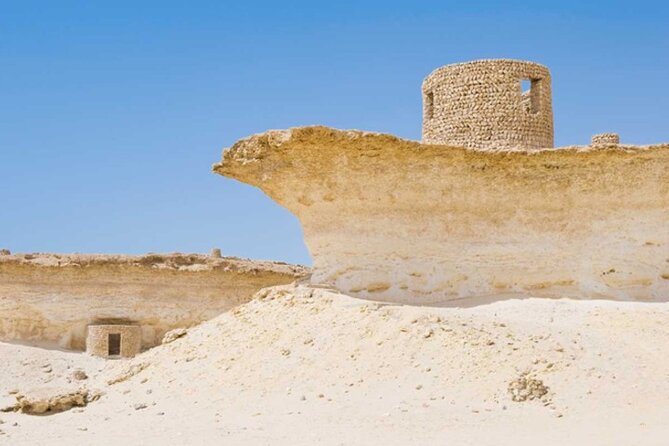
A four-hour duration is a practical fit for this route. The three stops account for roughly 90 minutes if you spend the planned 30 minutes at each one. The remaining time allows for pickup, transfers, and the distances between western Qatar’s sights.
That means the tour will not feel like four hours of continuous activity. You will have periods in the vehicle. I see that as part of the experience, since the desert setting and distance from central Doha are what make the combination possible.
Pickup is offered, which removes one of the biggest practical problems with visiting spread-out sights. You do not need to arrange separate transport between the sculpture, rock formation, and racetrack.
Because this is a private activity, only your group takes part. That is useful for families, couples, and small groups who prefer not to wait for a large party. It also gives you a better chance to ask about the places you are seeing.
The available information does not specify the vehicle type, exact pickup area, or group-size limit. Confirm those details when booking if they matter to you. The mobile ticket is convenient, and booking confirmation is provided at the time of reservation.
Is $61 a fair price?
At $61 per person, the value depends on how you would otherwise reach these sites. You are paying for a roughly four-hour private outing with pickup offered, a guide, and access to three separate locations. Admission to the listed stops is free, so the cost is mainly for transport, planning, and guiding.
For someone without a car, that can be a sensible deal. These attractions are spread out, and arranging individual rides could be inconvenient. The private format also gives the price more weight than a simple admission ticket would.
The value is weaker if you already have reliable transport and only want to see one site. In that case, a dedicated visit to the Serra sculpture or Mushroom Rock might suit you better, though the supplied information does not provide separate transport prices.
Group discounts may improve the cost for a larger party. Since the activity is private, ask how the discount applies to your group before payment. The $61 figure is listed per person, but the final value depends on the size of your party and the available discount.
I would call the price reasonable for a visitor who wants a ready-made route beyond Doha and prefers not to manage the logistics alone. The tour is not a bargain in the sense of offering many paid attractions, but it does combine three distant stops in a compact schedule.
Who will enjoy this tour most?
I would recommend this outing to people who want something different from central Doha. It suits you especially well if you like:
- Large-scale modern art
- Unusual rock formations
- Desert scenery and photography
- Qatari sporting traditions
- Private tours with pickup
- Short excursions that fit into a busy itinerary
Families may appreciate the variety. The rock offers an easy visual subject, the sculpture gives children room to notice shapes and scale, and the camel track adds animals and movement.
It is also a good choice for first-time visitors who have already seen some of Doha’s main city sights. The route shows a less urban side of Qatar and gives you a reason to leave the center.
I would be more cautious about recommending it to someone seeking detailed history, archaeological sites, or a long cultural conversation. The tour provides cultural context through camel racing, but it does not list museums, old neighborhoods, forts, or heritage houses.
Art lovers should give the Serra stop extra weight when deciding. The installation is the most distinctive part of the day, and it is unlike a standard monument visit. If contemporary art does not interest you, the 30-minute stop may feel brief and abstract.
Small details that improve the day
Plan for a desert outing rather than a city walk. The information does not specify weather protection, refreshments, or restroom arrangements, so it is sensible to prepare for a simple route with limited facilities at the individual stops.
A mobile ticket is useful because you can keep your confirmation on your phone. Booking confirmation arrives at the time of reservation, and most people can participate according to the supplied details.
The cancellation terms are forgiving if your plans change early. You can cancel for a full refund up to 24 hours before the start time. Cancellations or changes made less than 24 hours before departure are not refunded or accepted, and the cutoff uses local Qatar time.
Guide Faisal is worth noting. He is praised for making the outing enjoyable and for adding to the sense that the day is more than a series of transfers. A good guide matters here because the sculpture benefits from explanation, the rock formation rewards observation, and the camel track has cultural meaning beyond the visible action.
Should you book the West Qatar tour?
Book it if you want a compact, private trip that connects art, geology, and Qatari tradition. The Richard Serra sculpture and Mushroom Rock are the strongest visual pair, while Al Shahaniya gives the day its cultural character.
Skip it if your priority is old Doha, museums, or a full day of traditional experiences. The route is spread out, the stop times are short, and much of the four-hour schedule is spent traveling.
For most visitors with limited time, I think the tour offers a worthwhile change of scene. It gives you three very different sights, includes pickup, and avoids the trouble of arranging transport across western Qatar. Just book it for the combination, not for one attraction alone.
FAQ
How long is the Richard Serra Sculpture and Mushroom Rock tour?
The tour lasts approximately four hours.
What locations are included?
The experience includes Richard Serra’s East-West / West-East sculpture, the Mushroom Rock Formation, and Al Shahaniya Camel Race Track.
Is pickup offered?
Yes. Pickup is offered as part of the experience.
Is this a private tour?
Yes. Only your group participates in the activity.
How much does the tour cost?
The listed price is $61 per person. Group discounts may be available.
Are admission tickets included?
The listed admission for each of the three stops is free.
Can I use a mobile ticket?
Yes. A mobile ticket is available.
What is the cancellation policy?
You can cancel up to 24 hours before the experience starts for a full refund. Cancellations or changes made less than 24 hours before the start time are not refunded or accepted.
Just added around Doha
- Explore desert Qatar: Off-Road Adventures, dune bashing Tour★ 5.0 · 3 reviews
- Doha: Desert Buggy Ride, Camel Ride, Dune Bashing, Sandboard★ 5.0 · 3 reviews
- Private Wakesurfing or Wakeboarding along Doha’s skyline★ 5.0 · 3 reviews
- Private Desert Safari, Sand Dunes Bashing and Inland Sea Visit★ 5.0 · 3 reviews
- “Doha Desert Safari with all activities”★ 5.0 · 3 reviews
- Guided Doha Sightseen Tour By Certified Tour Guide (Private Tour)★ 5.0 · 3 reviews
- Grand Qatar Tour★ 5.0 · 3 reviews
- Doha: Private City tour from Cruise Port terminal★ 5.0 · 3 reviews
West Coast & Richard Serra, compared.
Qatar West Coast tour to Richard Serra Sculpture and Mushroom Rock Formation
Read our review →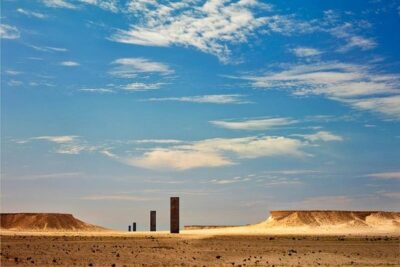
Qatar West Coast tour, Zekreet, Richard Serra Sculpture, Mushroom Rock Formation
Read our review →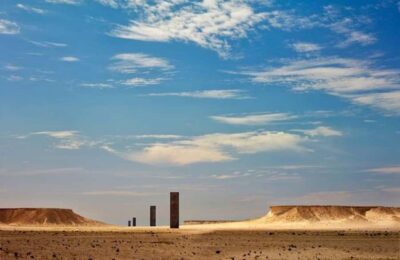
West Coast Qatar Tour, Sculptures, Camel Racing track
Read our review →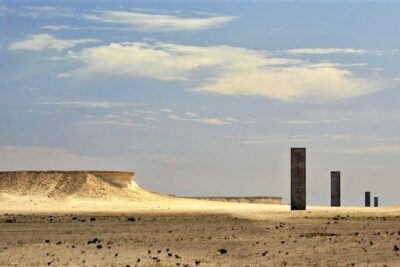
West Coast tour, Zekreet, Richard Serra Sculpture, Mushroom Rock Formation
Read our review →Richard Serra Sculpture, Zekreet and West Coast Tour
Read our review →
Explore Zekreet: Richard Serra Art & Mushroom Rock Wonders
Read our review →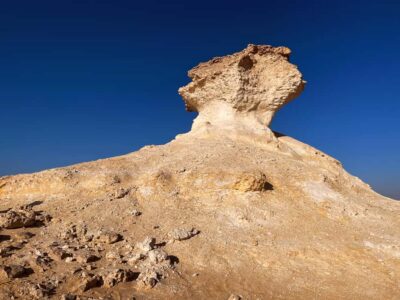
West Qatar Guided Journey With Pickup & Drop-Off
Read our review →Browse the lists this tour appears in