
Reviewed · PRIVATE DRIVERS
Doha: Explore the North and West of Qatar With Transfers
Qatar’s best surprises lie beyond Doha. This seven-hour trip gives you two things I especially like: a broad look at Qatar’s past and present, from fishing harbours and forts to Richard Serra’s giant steel artwork, and a small-group 4×4 ride that makes a far-flung route practical. You also get an English-speaking guide, hotel pickup, water, and karak tea included in the $108 price.
The main consideration is time in the vehicle. The route covers a lot of ground, with several drives of 30 to 40 minutes, and lunch is not included. If you want a slow visit at one site, this is not the right fit. If you want to see how sharply Qatar changes outside the capital, it is a strong day out. Guides named Arum and Muzzi have been praised for clear explanations, good driving, and making the history easy to follow.
In This Review
- Key points to know before booking
- Why this route shows you more than Doha
- Al Khor Harbour: starting with Qatar’s fishing coast
- Purple Island: mangroves, paths, and a slower half-hour
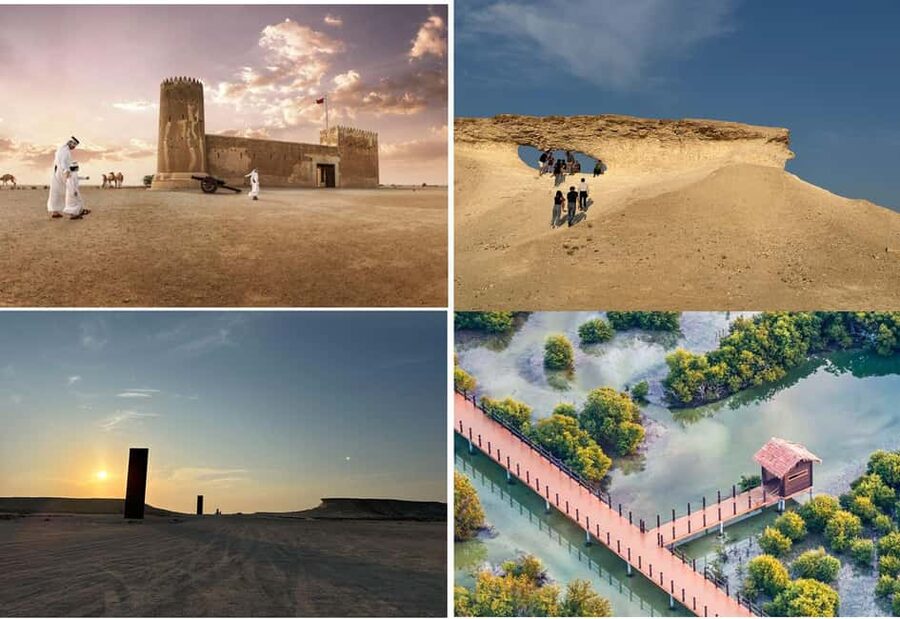
- Al Zubara Fort: the historical heart of the day
- Zekreet’s rocks and village ruins: Qatar at its roughest
- Richard Serra’s East-West/West-East: art on a huge scale
- Al Shahaniya Camel Racetrack: the lively final stop
- How the timing works across seven hours
- What is included, and what you should plan for
- Who will enjoy this Qatar day trip most?
- Should you book it?
- FAQ
- How long does the North and West Qatar tour last?
- Where does the tour begin and end?
- What language is the tour conducted in?
- Is transportation included?
- Is food included?
- How many people can join the tour?
Key points to know before booking
- Seven hours from Doha: A full-day route covers Al Khor, Purple Island, Al Zubara, Zekreet, Richard Serra’s desert art, and Al Shahaniya.
- Small groups of up to 12: The limited group size should make it easier to hear the guide and ask questions.
- A useful mix of places: You move from coastal scenery and mangroves to a UNESCO-listed fort, desert rock, village ruins, and camel racing.
- Travel is by air-conditioned 4×4: This matters on a route with long open-road sections and remote desert stops.
- Arum and Muzzi receive strong praise: The guide can make a big difference here, since much of the value comes from the stories behind the places.
- Bring your own meal plan: Bottled water and karak tea are included, but food is not.
Why this route shows you more than Doha
Doha gives you museums, modern towers, souqs, and polished waterfront spaces. This tour takes you into a quieter Qatar, where old trading sites, coastal plants, rough stone, and open desert tell a different story.
I like that the route is not built around one famous attraction. Instead, it links several smaller stops. You see how the country’s past depended on the sea, how trade shaped the north, and how contemporary art now occupies the desert west of the capital.
The pace is active but not frantic. Most stops last between 20 and 60 minutes, enough for a guided explanation, photographs, and a short walk. The trade-off is that you will not spend hours at any one place. Think of this as a well-filled introduction to the north and west, not a leisurely stay in each location.
The transportation helps. A private-feeling 4×4 route is more suitable than trying to connect these scattered places yourself, particularly for the desert sections around Zekreet. The air conditioning is also welcome in Qatar’s heat. The tour includes pickup and drop-off in Doha, so you do not need to arrange separate transport to a meeting point.
More private drivers and transfers:
- Doha Night Desert Safari Camel Ride Dune Bashing with Transfer
★ 5.0 · 720 reviews - Doha: Dune Safari, Camel Ride, & Sandboarding with Transfer
★ 4.8 · 587 reviews - From Doha: North of Qatar Guided Tour with Transfers
★ 4.9 · 539 reviews
Al Khor Harbour: starting with Qatar’s fishing coast
The first stop is Al Khor Harbour, around 40 minutes from Doha by vehicle. It is a calm place to begin, with sea views and a chance to hear about Qatar’s traditional fishing life.
This stop gives the day some useful context. Before Qatar’s oil wealth and modern skyline, coastal work shaped daily life. Harbours such as Al Khor connect the modern country to fishing and maritime trade.
You have about 20 minutes here for sightseeing and photographs. That is enough to enjoy the view and listen to the guide, but not enough for a long waterfront wander. I would treat it as an orientation stop rather than a major attraction. The quiet setting also gives you a welcome break from the city before the route heads toward Purple Island.
Purple Island: mangroves, paths, and a slower half-hour
Purple Island is one of the most pleasant nature stops on the route. It is known for mangroves, coastal plant life, and a setting that feels far removed from central Doha.
The visit includes a guided walk of about 30 minutes. You can expect tranquil paths, shallow coastal scenery, and opportunities for photographs. The mangroves provide a different view of Qatar than the dry inland desert, and the stop works well for anyone who enjoys birds, plants, and open air rather than indoor museums.
The name can create a slightly misleading expectation. Do not arrive expecting a bright purple island in the ordinary sense. The appeal is the coastal environment and its connection to Qatar’s natural history.
Wear shoes that are comfortable for walking. The tour includes several short walks, and Purple Island is more enjoyable if you are prepared to move around rather than stay beside the vehicle. Since the stop is only half an hour, keep your pace easy but purposeful.
Al Zubara Fort: the historical heart of the day
After another drive, you reach Al Zubara Fort for the longest stop, about one hour. This is the major historical visit, and it gives the tour its strongest sense of place.
The fort was connected to Al Zubara, once an important trading post. Here, the guide can explain Qatar’s role in regional commerce and how the site has been preserved. The fort itself offers a clear, tangible link to the past. It is easier to understand old trade routes when you are standing at the place that supported them, rather than only reading about them in a museum display.
This is where Arum’s and Muzzi’s strengths matter most. Several people praised their explanations of Qatar’s past and said they made the country’s older story feel clear and engaging. That is useful because the fort can be appreciated at a glance, but the historical details give the visit weight.
Allow yourself time to look carefully at the fort and its setting. The one-hour stop is generous compared with the shorter photo breaks later in the day. Still, this is not a full archaeological excursion. The tour gives you a guided introduction, then moves on.
A completely different sort of day out from Doha:
- Doha: Safari, ATV, Camels, Sandboarding and Inland Sea Tour
★ 4.8 · 5,291 reviews - Doha: ATV, Quad/Buggy Dune Bashing, Camel Ride, Sandboarding
★ 5.0 · 3,784 reviews - Desert safari, Dune bashing, sandboarding, camel, ATV Option
★ 5.0 · 2,826 reviews - Qatar Gold Dune Safari, Dune Bashing,Camel Ride,Sand Boarding,Inland Sea Desert
★ 5.0 · 2,807 reviews
Zekreet’s rocks and village ruins: Qatar at its roughest
The western portion of the tour changes tone. After a transfer of roughly 40 minutes, you reach the Zekreet area, where the scenery becomes stark and unusual.
The Zekreet rock formations are made of weathered limestone, rising from the desert in dramatic shapes. They make excellent photograph subjects because the setting is so spare: pale rock, open ground, and a wide sky. The attraction is not a single formal viewpoint. It is the contrast between the odd stone forms and the surrounding desert.
You then visit a traditional village area and Zekreet Fort Ruins. The village stop lasts about 30 minutes, while the fort ruins receive a shorter visit of around 10 minutes. Together, they offer a glimpse of rural settlement patterns and older building remains.
Keep your expectations measured. These are atmospheric places rather than restored monuments with extensive displays. You are there to see the remains, understand their setting, and hear the guide explain what you are looking at. The short fort visit suggests a quick stop for photographs and background rather than a long exploration.
I like this part because it gives you a feel for Qatar beyond its carefully maintained public spaces. The quiet village and scattered ruins are simple, but that simplicity is the point. You see how much of the country’s older built environment has been shaped by heat, distance, and scarce resources.
Richard Serra’s East-West/West-East: art on a huge scale
Near Zekreet, the desert suddenly becomes a gallery. Richard Serra’s East-West/West-East installation consists of massive steel slabs placed across the open terrain.
The work is powerful because it does not compete with the desert. It uses the desert’s scale. The dark steel forms create a strong line across the pale surroundings, and the distance between the pieces encourages you to walk and look from different angles.
You have roughly 30 minutes for the installation, including a short walk and sightseeing. That should be enough to appreciate the arrangement and take photographs, though you may wish the visit were longer if you enjoy contemporary art.
You do not need a technical art background to enjoy this stop. The basic idea is direct: enormous man-made forms placed in an enormous natural setting. The guide may add meaning and context, but the scale is something you can grasp immediately.
This is also a good example of the tour’s balance. You begin with fishing heritage and an old trading fort, then end up considering modern art in the desert. Qatar’s story is not frozen in the past, and this stop makes that clear without requiring a museum visit.
Al Shahaniya Camel Racetrack: the lively final stop
The last major visit is Al Shahaniya Camel Racetrack, about 30 minutes after the desert art. This is one of the most distinctive experiences on the route because camel racing remains closely tied to Qatari culture.
The stop lasts about 20 minutes. You can see the track, learn about the tradition, and, when racing is taking place, watch the camels in action against the desert backdrop. Timing matters here. The tour includes a visit to the racetrack, but the amount of racing activity you see can depend on what is happening when you arrive.
This was the favorite stop for at least one recent participant, which is easy to understand. The racetrack feels less like a standard sightseeing attraction and more like a window into a living local tradition. It also gives the day a lively finish after the quiet ruins and wide desert.
If camel racing is your top priority, keep your expectations flexible. The tour schedule allows only about 20 minutes, so this is an introduction rather than a full race-day experience. For most people, that is enough to make the visit memorable without turning the entire day into a sporting event.
How the timing works across seven hours
The advertised duration is seven hours, including pickup, transfers, visits, and the return to Doha. The route contains several substantial drives:
- About 40 minutes from Doha toward Al Khor
- About 40 minutes between the early coastal section and Al Zubara
- About 40 minutes toward the Zekreet area
- About 30 minutes from the desert art to the camel racetrack
Those drives are not wasted time. They are part of the reason you can connect places that are spread across Qatar. Still, you should know what kind of day you are buying. This is a sightseeing circuit, with frequent changes of scenery, not a single-site tour.
The small group size, limited to 12 people, is a real advantage. On a long driving day, a crowded vehicle can make the experience tiring. A smaller group should give you more room to hear the guide and ask about places that catch your attention.
The quality of the guide is especially important. Arum is repeatedly praised for his stories about Qatar, his driving, and his ability to answer questions. Muzzi is also described as engaging and clear. The provider is Travel Mate Tours, and the strongest praise centers on the service and the way the guides bring the stops together.
What is included, and what you should plan for
The $108 price includes an English-speaking guide and driver, transport in an air-conditioned 4×4, bottled drinking water, traditional karak tea, and hotel pickup and drop-off in Doha.
That is a fair value if you want to cover both the northern and western parts of the country in one day. Hiring transport independently, working out the route, and finding the remote sites would take effort. You are paying not only for the vehicle but also for the guide’s explanations and the convenience of a planned route.
Food is not included. Plan around that fact before you set off. The supplied information does not specify a meal stop, so you should not assume lunch is part of the day. Water and karak tea help, but they do not replace a meal.
The tour is offered in English and is listed as wheelchair accessible. Because the program includes short walks at Purple Island, Zekreet, and the Serra installation, it is sensible to confirm any specific mobility needs when booking. The general accessibility information is positive, but the individual surfaces and desert settings may vary.
Free cancellation is available up to 24 hours before departure, with a full refund, and you can reserve now and pay later. Starting times depend on availability. These details make the tour easier to fit into a short Doha visit.
Who will enjoy this Qatar day trip most?
I would recommend this tour to you if you want a wide view of Qatar rather than another day inside Doha. It suits first-time visitors, people with a stopover long enough for a full day, and anyone interested in history, nature, photography, or local traditions.
It is particularly good for curious travelers who like variety. In one day, you see a harbour, mangroves, a UNESCO World Heritage site, a village, ruins, unusual rock formations, monumental art, and a camel racetrack. That range is the tour’s main strength.
You may want something else if you dislike long drives, prefer a slow pace, or need a guaranteed meal and extended time at each stop. The shorter visits can feel brisk, especially at the village ruins and camel racetrack.
The tour also suits visitors who value a guide’s local explanation. Without that context, some stops would be attractive but brief. With Arum or Muzzi explaining the old trading post, rural life, and Qatari traditions, the route becomes easier to read.
Should you book it?
Book this tour if you want to see the Qatar beyond Doha in one organized day, and if you value a guide who can connect old places, natural settings, and modern art. The combination of Al Zubara Fort, Zekreet, the Serra installation, and camel racing is unusual enough to justify the trip.
Skip it if your priority is a relaxed day with long meals, extended walks, or one major attraction. The best reason to choose this tour is its range. For $108, hotel transfers, a 4×4, water, karak tea, and a small group make it a practical way to cover a lot of ground. Just bring patience for the road, comfortable walking shoes, and a plan for food.
FAQ
How long does the North and West Qatar tour last?
The tour lasts seven hours, including transportation from Doha, visits to the listed sites, and the return to Doha.
Where does the tour begin and end?
Pickup is provided in Doha, and the tour returns to Doha at the end of the day.
What language is the tour conducted in?
The live tour guide speaks English.
Is transportation included?
Yes. Transportation is provided in an air-conditioned 4×4, along with hotel pickup and drop-off.
Is food included?
No. Meals are not included. Bottled drinking water and traditional karak tea are included.
How many people can join the tour?
It is a small-group tour limited to 12 participants.
Just added around Doha
- Explore desert Qatar: Off-Road Adventures, dune bashing Tour★ 5.0 · 3 reviews
- Doha: Desert Buggy Ride, Camel Ride, Dune Bashing, Sandboard★ 5.0 · 3 reviews
- Private Wakesurfing or Wakeboarding along Doha’s skyline★ 5.0 · 3 reviews
- “Doha Desert Safari with all activities”★ 5.0 · 3 reviews
- Private Desert Safari, Sand Dunes Bashing and Inland Sea Visit★ 5.0 · 3 reviews
- Grand Qatar Tour★ 5.0 · 3 reviews
- Guided Doha Sightseen Tour By Certified Tour Guide (Private Tour)★ 5.0 · 3 reviews
- Doha: Private City tour from Cruise Port terminal★ 5.0 · 3 reviews
Private Drivers, compared.

Doha Night Desert Safari Camel Ride Dune Bashing with Transfer
Read our review →Dune Safari, Camel Ride, & Sandboarding with Transfer
Read our review →
Desert Safari, Dune Bashing, Inland Sea With Transfers
Read our review →

Airport Transfer – TO or FROM Hammad International Airport
Read our review →
Browse the lists this tour appears in